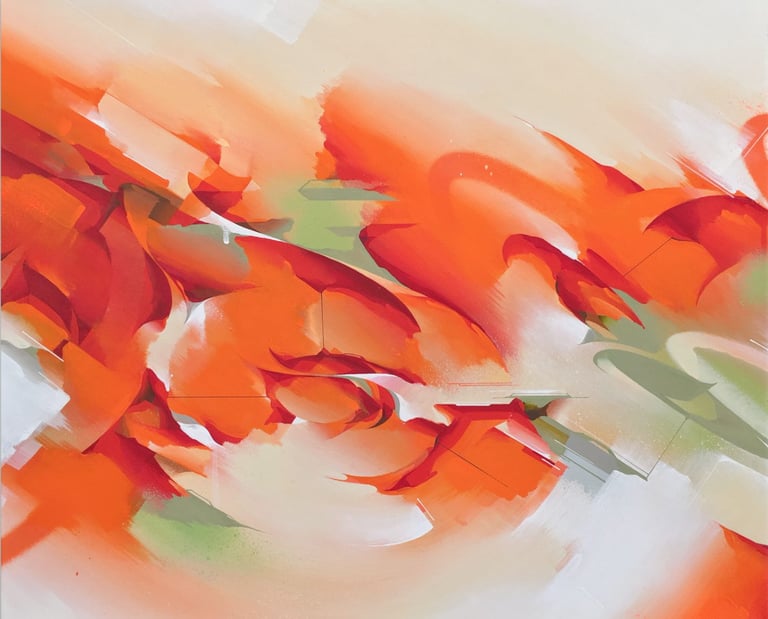
DOES: from Goal to Wall
A whistle blows, the match begins: a race against time toward that longed-for, almost mythic wall where everyone would want to score. There you are, alone, near the goal, hoping to find the finish. The right moment, that split second when everything is decided — a goal, a pitch, a wall: three different spaces that become the same instant of possibility. And in the end, it always comes down to the same thing: the attempt to leave a mark before the final whistle.
by Flabingo Mag
Joos van Barneveld, known as DOES, is a Dutch artist whose practice emerges from the encounter between sporting discipline and graffiti writing on the city’s walls. His formation begins with football, which he starts playing at just nine years old, eventually reaching professional level in the Dutch Serie A with Fortuna Sittard.
It is toward the end of the 1990s that he comes into contact with the world of graffiti, which fully captivates him and leads him to split his life between the pitch and the street: a professional athlete by day, a writer on walls by night, as if two parallel identities were inhabiting the same body.
A serious injury abruptly ends his football career and marks a decisive turning point. From that moment on, what had begun as a parallel passion gradually transforms into his primary language, eventually becoming a full-time profession. With his definitive shift into art, DOES transfers into writing the same discipline, precision, and obsession with control developed through sport.
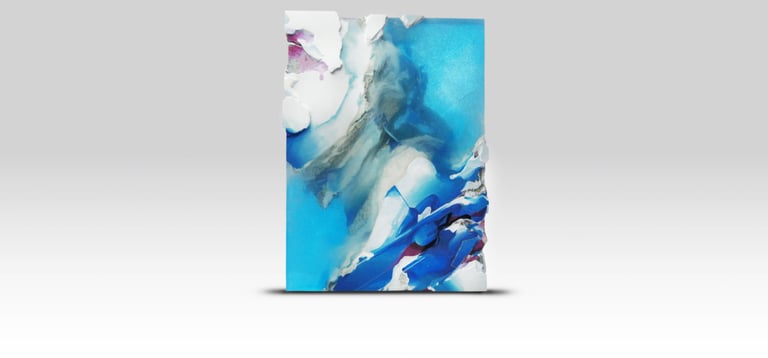
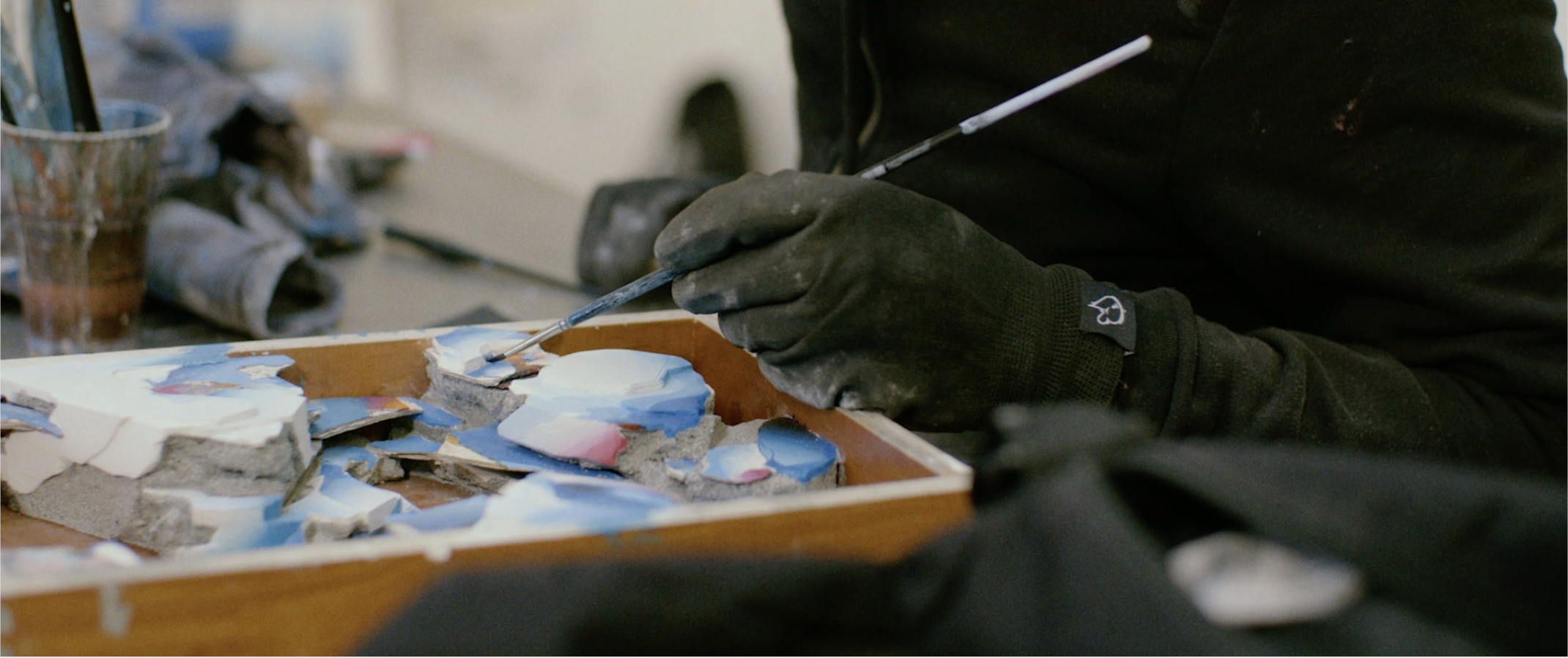
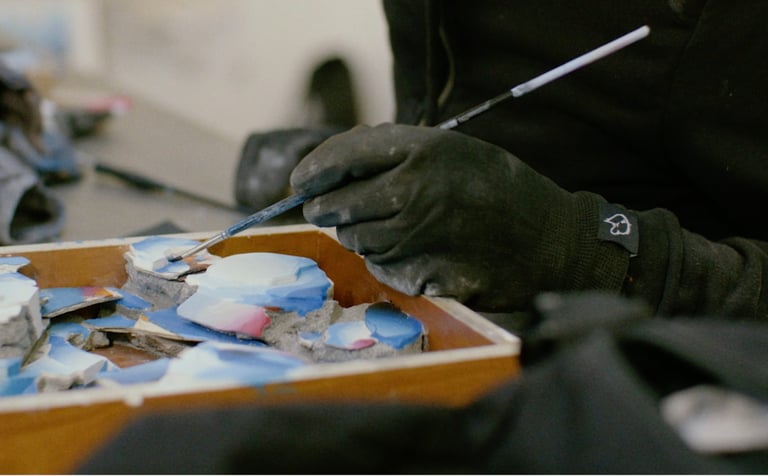
Today, his practice extends beyond graffiti writing: through collage and sculpture, the city is read as a material to be excavated, an archaeological surface from which to extract fragments destined to disappear, fragile traces eroded by time.
Over the years, his name has become central within the international graffiti scene, establishing him as one of the most influential figures in 21st-century street art and contemporary art, painting across the world and expanding the language of graffiti far beyond its traditional urban context.
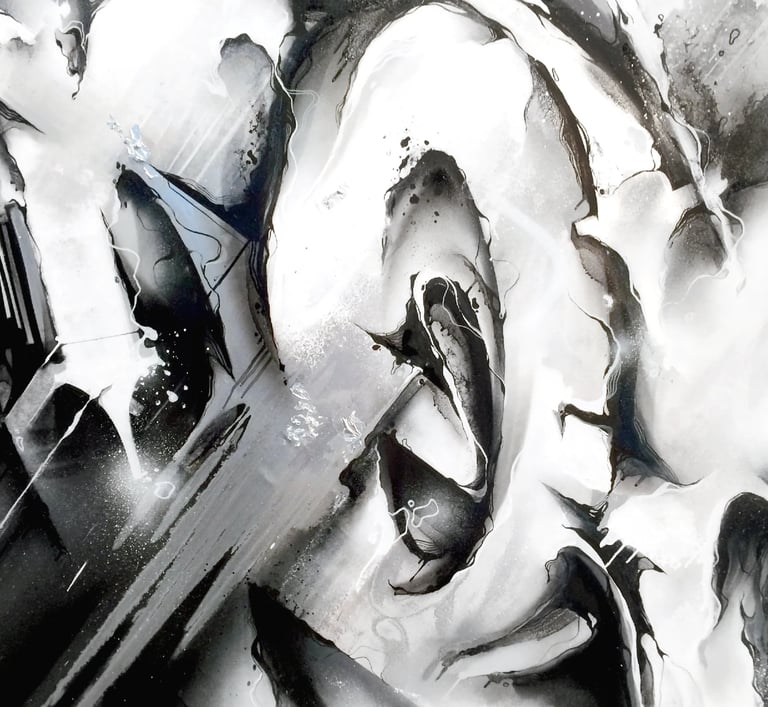
However, it is in his most recent production that DOES is radically redefining the relationship between graffiti, memory, and urban space. The Dutch artist now treats walls as contemporary relics. He no longer simply paints them: he perforates them, detaches them, and retrieves real fragments covered in spray paint, preserving their geographical coordinates, temporal traces, and material stratifications. These urban remnants are then transformed into sculptures and collages that resemble fossils emerging from underground culture.
Graffiti, originally born to be ephemeral, thus becomes a physical archive of the city.
DOES’s works speak of erosion, memory, and human presence. With a gaze reminiscent of archaeological excavation through the traces of time, the artist builds a tangible documentation of graffiti culture and its impact on the contemporary urban landscape. Each fragment extracted from the wall preserves traces of passages, gestures, and identities that would otherwise be destined to disappear beneath new layers of paint or demolition.
In an era in which everything is rapidly consumed and forgotten, our relationship with the city and with images appears increasingly fragile. The urban landscape is subjected to a continuous process of erasure and overwriting, where every trace is quickly replaced by the next. Time moves faster than our ability to perceive it, while attention remains captured by screens and devices. A constant flow in which perception becomes accustomed to everything yet risks lingering on nothing: even the wall, a silent and everyday presence, becomes invisible, a neutral surface crossed without ever being truly seen.
In this context, graffiti can be read as an interruption of automated perception: an attempt to draw attention away from the screen and reconnect it with physical space, the street, and its painted surfaces. An open-air museum, belonging to everyone and for everyone.
Discover more click here.