FALBINGO'S EDITORIAL. OCTOBER 2026
After a three-month summer break, Flabingo is back. Not to pretend nothing happened, but to start again with greater clarity, determination, and enthusiasm than ever before.
by Flabingo Mag


We didn’t give up on the project, and we didn’t abandon hope. Quite the opposite: we are more strong than ever. The stop happened for technical and work-related reasons, at a time and in a place where the problem could not be avoided. A sudden failure of our computers forced us to pause. A break we didn’t choose, but one that was necessary.
We want to be a transparent collective, so let’s say it clearly: the MacBook we used as our main work device with all its data, programs, and most of our everyday work tools was severely damaged. In the end, we managed to repair it, but this experience reminded us of something very simple: devices don’t stop working just because they age. Often, they stop being useful because someone has decided they must become so.
THE HIDDEN EXPIRATION DATE
Apple, like many major tech companies, sets an invisible expiration date for every device we buy. A date not written on the label, not disclosed at the time of purchase, but very real once the product is considered “vintage” or no longer supported.
At that point, spare parts, updates, compatibility with software and programs, and real support begin to disappear. Official stores may even refuse to examine or repair your device. The message is clear: it doesn’t matter whether your computer might still work. You must replace it. You must buy a new device. You must re-enter the cycle.
The same dynamic applies to many other brands. Operating systems become increasingly heavy, updates take up more space, require more power, and turn devices that still work into slow, unstable, and frustrating objects to use. Not always because the phone is truly ready to be thrown away, but because it has been slowly pushed out of the present.
All of this has a name: planned obsolescence. It is the strategy of deliberately limiting a product’s effective lifespan in order to speed up its replacement. No longer do we simply sell an object: we sell the need to buy it again.
And then there is psychological obsolescence. Colors, shapes, materials, and aesthetic details change not because the previous product doesn’t work, but because it must look old. Outdated. Almost embarrassing to take out of your pocket.
In this way, whoever buys the latest model gains a status symbol. Whoever keeps last year’s model perhaps released only a few months earlier is pushed to feel behind, out of place, less desirable. It is a scientifically constructed pressure: create insecurity in order to sell belonging.
COMING BACK TO (R)ESIST
Flabingo is back with new ideas, articles, tips on events and exhibitions, but above all with a new voice.
In November, we will launch our first independent podcast: without formulas, social-media standards, or censorship. A space to talk with musicians, designers, and artists about a question that today seems almost old-fashioned: how do you (R)ESIST?
We will speak with those who continue to believe in what they do. With those who don’t create just to become famous on social media, chase an algorithm, or turn themselves into content meant to be consumed in a few seconds. With those who still want to say something, make their voice heard, and find someone willing to listen.
We’ve also updated our section on October events, exhibitions, and concerts: you’ll find it here, along with a selection of the most interesting events of the month.
To support the project, follow its evolution, or send us ideas, proposals, and provocations, subscribe to our newsletter (you’ll find the sign-up form at the bottom of our homepage) and write to us at info@flabingo.it.
NOT EVERYTHING ENDS
A farewell and best wishes go to the entire team at Wired Italia, which shut down this summer after 17 years of activity. For anyone who truly followed that world, Wired was a reference point in Italy: technology, gadgets, culture, science, economics, innovation, and everything that tries to read the present before it has already become the past.
Born in San Francisco in 1993 and arriving in Italy in 2009, Wired established itself with an unprecedented language: provocative, optimistic, and focused on the innovation of the country’s system. The website is still online, and we hope it remains so, at least for a while: as an archive of knowledge, curiosity, and thought.
In a country where resistance is no longer only an anti-fascist issue, but a genuine way of life. Resisting ignorance, submission, politically managed censorship, and the big tech companies that, in agreement with one another, steer the world and shape increasingly artificial minds. Not the minds of FLABINGO.
On January 1, 2026, MTV Italy and MTV across Europe also left us. We certainly don’t need to explain what it represented, or how much it was part of the lives of those who grew up in the 1990s. MTV wasn’t just music: it was imagination, language, style, discovery, and identity. Thank you for everything you did.
We only hope that Italy doesn’t become obsolete too.
THE BUGGLES’ PROPHECY
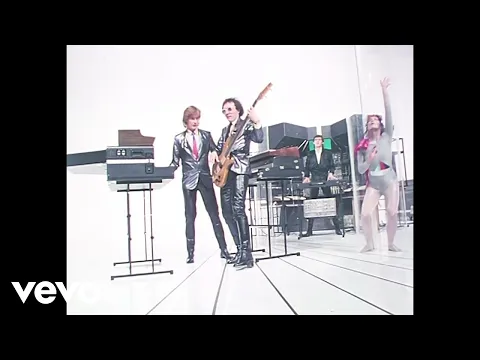
As a symbolic tradition, the first—and, at the same time, the last song played before MTV shut down was “Video Killed the Radio Star” by the Buggles, released in 1979.
It was not a random choice. The meaning of this song captures exactly the theme we have discussed in this article. An almost prophetic track, it tells of the arrival of a true dictatorship of images: with the advent of television, it was no longer enough to make great music, you also had to be “beautiful,” presentable, and suited to the big screen, “Pictures came and broke your heart.”
Technology thus ends up replacing human beings: video recorders, computers, and machines redefine, between nostalgia and unease, the way we create and think. The song also tells of the end of the old stars, sacrificed precisely because of those two factors image and technology that forever transformed the world of music and entertainment.
That is what we are doing now, too, with Flabingo. To the notes of “Video Killed the Radio Star,” we begin a new journey.
Without adding anything else: turn your speakers all the way up and dance to this prophecy!