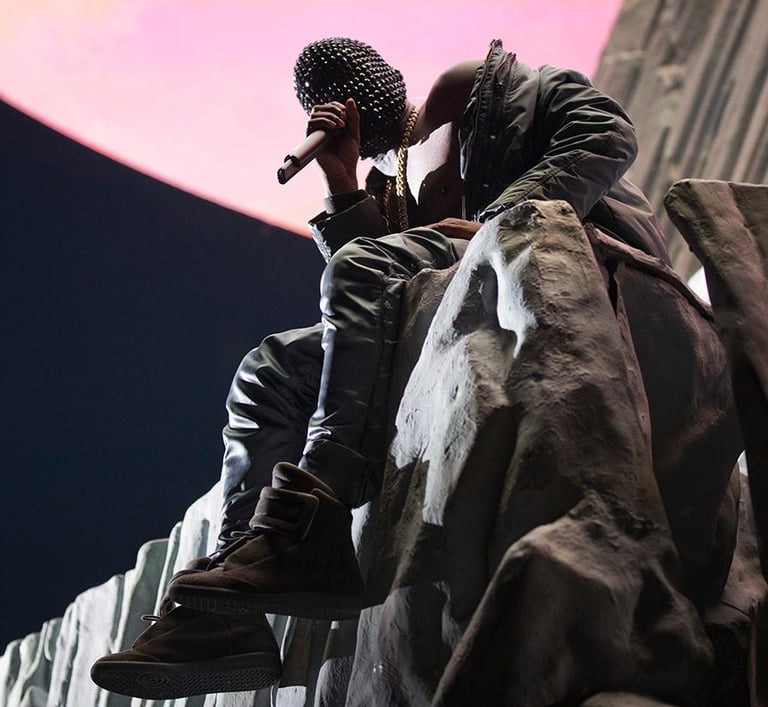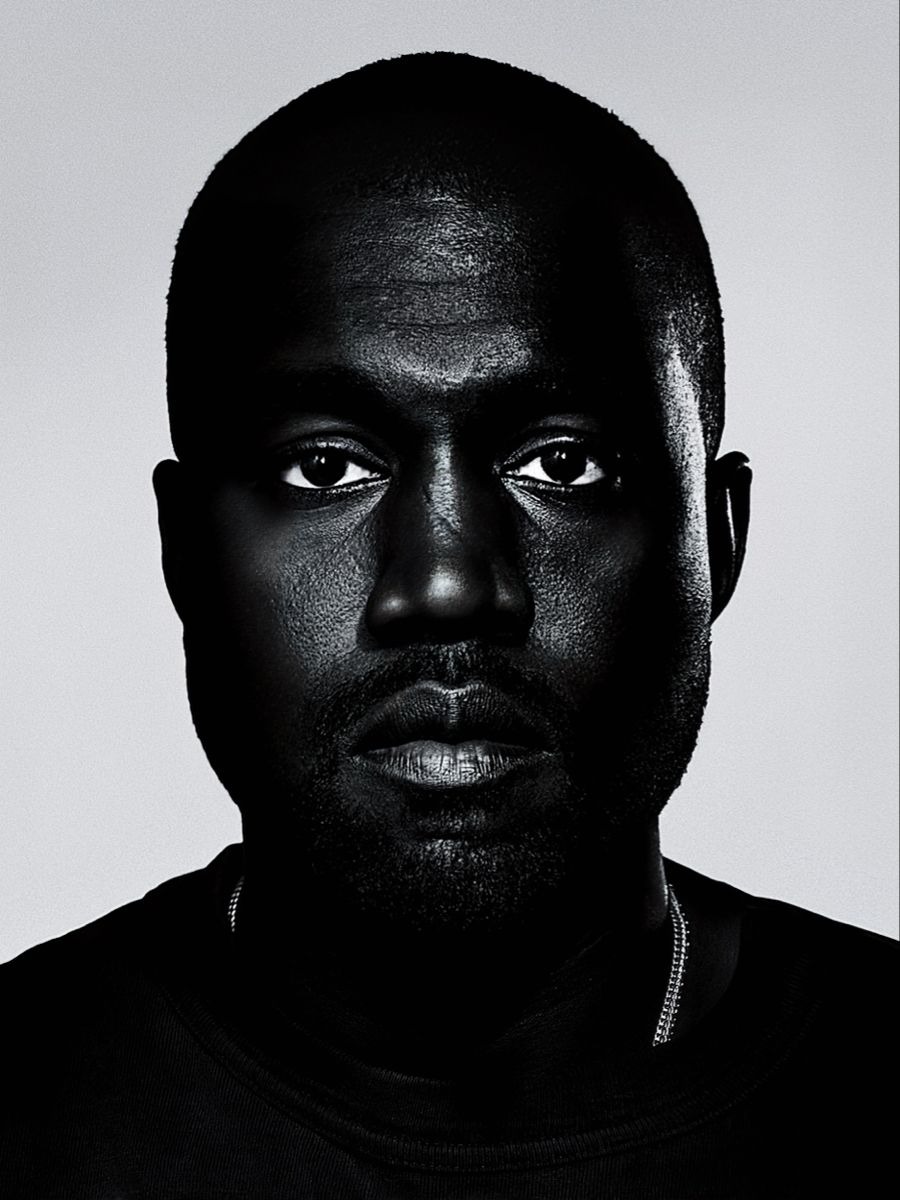
KANYE: Absolute genius or mad visionary?
Absolute genius or mad visionary? He stripped rap of its street bravado to lay it bare, between psychological torment and revolutionary sounds. Let's discover how a single mind continues to divide the entire world.
by Flabingo Mag
The artist who revolutionized rap by laying himself bare: he spoke openly about mental illness and fragility, changing the genre's language forever. This ability to put himself on the line defines his music as much as his public and stylistic choices, making him a polarizing yet central figure in contemporary culture.
Born Kanye Omari West—whose name in an African language means "the chosen one"—he chose to go by Ye in 2021, an expression of his essential self, with no last name or full first name. His family roots and the environment in which he grew up deeply influenced his formation: born in Atlanta and raised in Chicago after his parents' divorce, he also lived for a year in China, where his mother taught at a university for a cultural exchange. He grew up in a middle-class yet politically engaged context: his father, Ray, was among the first Black photojournalists for an Atlanta newspaper and a former member of the Black Panthers; his mother, Donda, was a well-known university professor and later her son's manager. Kanye dedicated two self-titled albums to her after her death (Donda), an event that deeply marked his personal and artistic life, drawing him closer to Christianity and paving the way for gospel tracks and a new thematic approach, as seen also in The Life of Pablo.
This upbringing and his international experiences partly explain the path that led him from a scholarship at the American Academy of Art to the decision to drop out of his studies at age 19 to focus on music. Moving to New York in 2000 to produce for Jay-Z, he released The College Dropout in 2004: the title and content reflect the courageous choice to follow his passion, breaking away from stereotypes and expectations.
The departure from traditional rap models is already evident in the content: unlike the typical "gangsta rapper," Kanye practices an introspective rap that addresses depression, mental illness, vulnerability, and emotional fragility. Tracks like Runaway established this new emotional register in the genre, giving voice to real and rarely discussed issues. To all of this is added an intense sonic research: original beats and sophisticated sampling, primarily from '70s/'80s R&B and soul, which redefined the aesthetics of contemporary rap.
His artistic commitment has often intertwined with social commentary. In 2005, he released Diamonds from Sierra Leone, one of his most famous and socially conscious tracks. The song weaves an engaging rhythm with a critical message about the contradictions of owning luxury goods like diamonds, which often hide stories of child exploitation and conflict, particularly in Sierra Leone. The use of a Shirley Bassey sample gives the track a solemn, almost theatrical tone, amplifying the reflection on social injustices. It denounces the diamond trade (the so-called "blood diamonds") that finances civil wars in Sierra Leone, where workers are enslaved by rebels and forced to kill their own families to obtain diamonds: "We work in the diamond rivers from sunrise to sunset under the watchful eyes of soldiers. Every day we fear for our lives".
The same critical spirit emerges in his public stances: he has supported social causes with significant donations—for instance, after Hurricane Katrina—and stood in support of the Floyd family. Why then do many consider him opposed to the Black Lives Matter movement? The issue is that, in addition to grassroots support, the movement received massive funding from large corporations, including Adidas and Apple; Kanye challenges this exact dynamic, defining it as "Racial Capitalism": according to him, mass media and multinationals have turned the BLM movement into a marketing brand, using donations to improve their image rather than truly changing the conditions of the Black community. This criticism contributed to the termination of his collaboration with the well-known footwear brand.
The same aesthetic consistency guides his work in fashion. Together with Virgil Abloh, he transformed streetwear into something elevated: he founded Yeezy, collaborating with Nike and Adidas, introducing clean lines, well-studied shapes, and a minimalist care that eliminates flashy logos to privilege design. Distinguishing himself here too from other brands, he completely removed text, large and conspicuous logos, thereby giving more importance to the product design itself, which remains highly recognizable. This vision, combined with often limited-edition productions and the end of his contract with Adidas in 2023, increased the hype surrounding the brand and his persona.
In recent years, however, his journey has also been marked by severe personal turbulence: after his divorce from Kim Kardashian and periods of intense stress, he made highly controversial statements and gestures, judged anti-Semitic by many, and adopted extreme symbols like the swastika in some productions. Without justifying these choices, one can observe how provocation has a history in music and fashion (think of punk with the Sex Pistols and figures like Malcolm McLaren and Vivienne Westwood). However, today certain symbols carry a historical weight that makes the provocation more painful and divisive.
The fact remains that, on a musical level, Kanye is an extraordinary talent capable of speaking to different generations, from millennials to Gen Alpha. A creative genius, inventor, and innovator, he has reinvented his image and his art multiple times.
In 2026, his new tour began: the stage is the world, and he is walking on it.