Design as a Form of Entertainment
Refrigerators that devour bodies to spit them into abysses of mad lights and infernal mirrors, liquid gardens that drown the soul in forbidden ecstasy. Design has escaped from the factories: now it forges playful apocalypses, where reality implodes in an orgy of cosmic wonder. Dare to cross the portal?
Design is a discipline that emerged between the late 1700s and mid-1800s in London, thanks to the Industrial Revolution and the first Great Universal Exhibition (EXPO) in London in 1851. The term initially referred to the design of physical objects; one of the roles of design is to respond to needs, solve problems, propose solutions, or explore new possibilities to improve the quality of human life.
In our days, this discipline has expanded enormously, assuming a decisive role especially with the advent of new technologies in the digital realm and the web. It has forged global connections through apps, social networks, and websites that, far from solving problems, have generated new and complex ones. It has emerged as a true ideological and conceptual current, one of the essential keys of modern man.
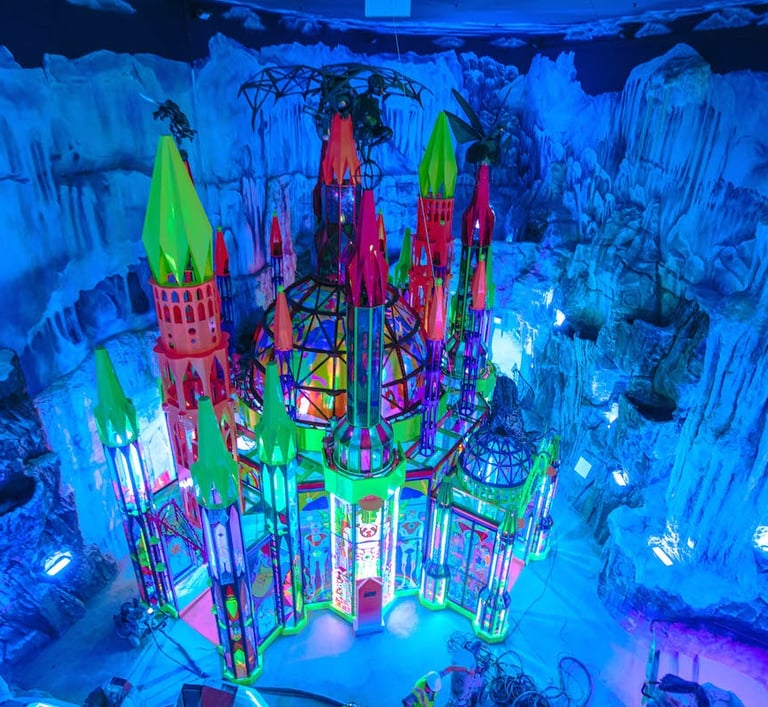
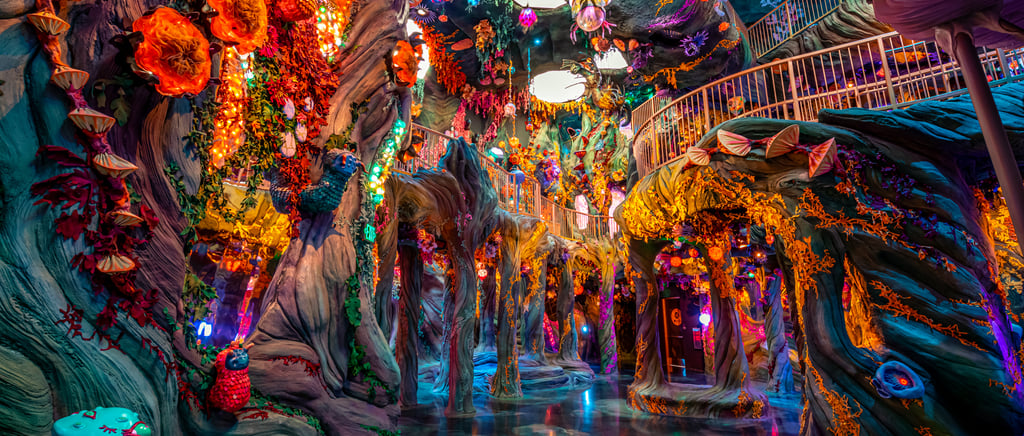
Focusing on this revolutionary conceptual aspect, design no longer limits itself to the mere design of objects: now it designs and creates worlds (real and virtual), new scenographies and environments, outside the norm and transformative. Emblematic examples are the multidisciplinary collectives teamLab in Japan and Meow Wolf in America, founded in the early 2000s and composed of artists, designers, programmers, mathematicians, and architects.
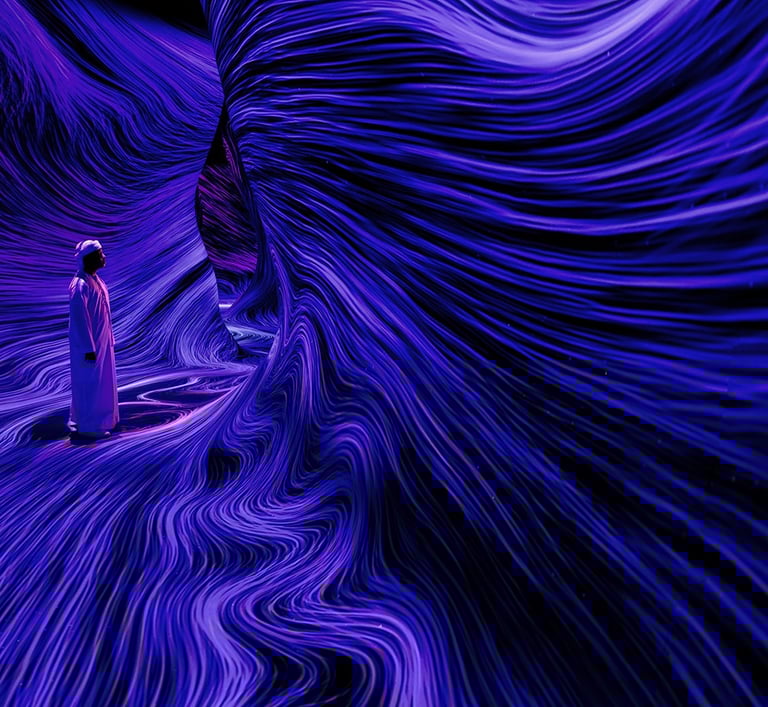
TeamLab, in 2001 in Tokyo thanks to Toshiyuki Inoko, creates immersive installations that blend art, science, technology, and nature. They are especially famous for their main works teamLab Borderless & teamLab Planets, both in Tokyo.
The first, as the name suggests, borderless, a space of over 10,000 square meters in which to get lost and explore infinite worlds, countless rooms made of installations, video mapping, lights, mirrors, LED screens, and much more. It was born to express the beauty of continuity. The visitor finds themselves surrounded by scenarios that change based on interaction with the people occupying the space.
The second, Planets, perfectly fuses advanced technologies with Nature, four thematic areas in which the visitor immerses in a multisensory space, water, lights, flowers, plants, colors, and scents.
In 2025, they entered the Guinness World Record as the most visited single-artist art museum in the world, surpassing 2 million visitors.
Meow Wolf, founded in 2008 in Santa Fe, New Mexico, unlike their Japanese colleagues, was born from a group of broke artists with a DIY (do it yourself) philosophy, with few resources at their disposal, crazy ideas, and a strong desire to escape monotony. In the first 3 years, they worked almost for free, but then they grew enormously, also thanks to public and private fundraisers, which led them to collaborate, for example, with George R.R. Martin (author of Game of Thrones)... some say they will be the Disney of the new millennium, and they might be right. Their philosophy is to get people out of the house and reconnect them in life.
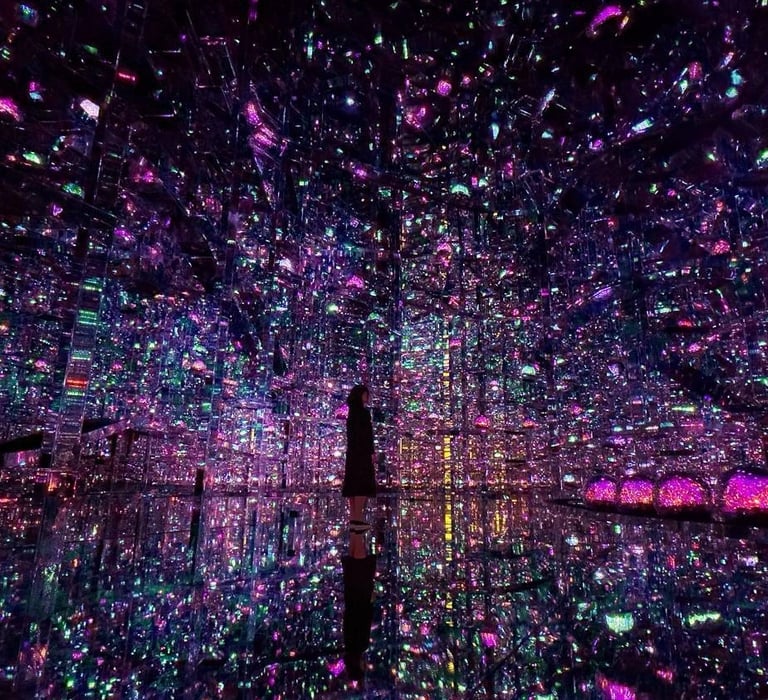
In Las Vegas, in the large AREA15 of 19,000 square meters, one traverses Omega Mart, a supermarket that appears normal at first glance, but paying closer attention, one immediately realizes that everything is not as it seems, and even through a refrigerator, the visitor is catapulted into a psychedelic setting made of fluorescent lights, mirrors, crazy installations... over 60 different portals to other worlds (as defined by the collective) where the only limit is imagination, and anything is possible.
Today, Meow Wolf is present with four major exhibitions, besides the one mentioned above, also in Houston (TX), Grapevine (TX), and Denver (CO).
In conclusion, we can say that design today, more than solving our practical problems, has become a means through which to address our existential problems and rediscover ourselves, reconnecting to reality with awe and wonder, like returning to childhood.
A new form, a point of view from which to look at reality, an innovative way of doing design that we define as Design For Fun.